

BETMAT Kinetic Turbidimetric Assay (KTA) Safeguards Pharmaceutical Endotoxin Testing with Reliable Advanced Detection
The Evolution of Endotoxin Testing in Modern Biomanufacturing
For decades, the gel-clot method served as the industry standard for Limulus Amebocyte Lysate (LAL) testing. Operating on a simple pass/fail principle, it relies on the manual inversion of a test tube to detect the formation of a solid gel clot after a 60-minute static incubation period. While effective for basic screening, the gel-clot assay presents distinct limitations in contemporary pharmaceutical environments. It cannot provide a specific numerical concentration of endotoxins, is highly dependent on subjective operator interpretation, and does not support automated data logging, electronic records, or continuous kinetic tracking.
To address these limitations, the pharmaceutical industry has increasingly adopted kinetic methods that continuously monitor the endotoxin-triggered enzymatic cascade over time, enabling objective and quantitative analysis. The Limulus Amebocyte Lysate (LAL) reaction is based on a highly specific serine protease cascade initiated by the recognition of bacterial endotoxins (lipopolysaccharides, LPS). Upon binding to and activating Factor C, a zymogen within the LAL system, a sequential enzymatic cascade is triggered, leading to the activation of Factor B and subsequently the proclotting enzyme, which is converted into the active clotting enzyme.
In the kinetic turbidimetric LAL assay, the activated clotting enzyme cleaves coagulogen, a soluble gel-forming protein present in the lysate, to generate coagulin. These coagulin monomers spontaneously polymerize to form insoluble fibrillar networks, resulting in a progressive increase in turbidity of the reaction mixture. This turbidity change is continuously monitored using a spectrophotometric microplate reader or dedicated kinetic endotoxin analyzer at a defined wavelength, typically 340 nm.
The assay quantifies endotoxin levels by measuring the rate of turbidity development or the time required for the reaction mixture to reach a predefined optical density threshold. This parameter, commonly referred to as the onset time or reaction time (Tₜ), is inversely proportional to the endotoxin concentration, allowing precise quantitative determination through calibration against endotoxin standards.
A critical parameter, gelation time is defined as the time required for light transmittance to decrease to a predefined threshold, typically 92% of the initial intensity. Because the activation rate of the enzymatic cascade is directly proportional to the initial endotoxin concentration, the reaction time is inversely proportional to the endotoxin concentration. Endotoxin concentration is quantified using a log-log relationship between Tg and known standards: lower endotoxin levels result in longer gelation times, while higher concentrations accelerate the reaction kinetics. This method eliminates the subjective visual judgment associated with traditional gel-clot methods.
Technical Characteristics and Specifications of the BETMAT Reagent
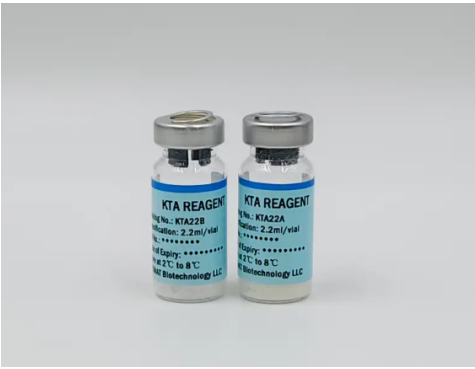
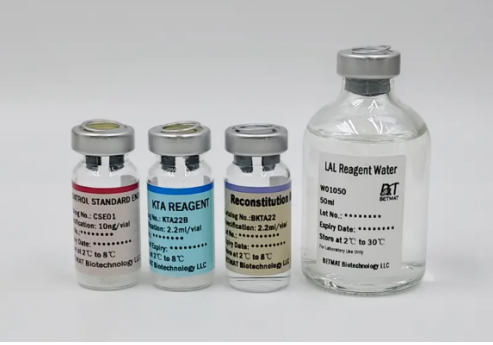
Developed by BETMAT Biotechnology LLC, the KTA Endotoxin Assay Kit (Kinetic Turbidimetric Method) is specifically engineered to meet the high-throughput quantification requirements of modern analytical laboratories. The product is formulated using high-quality lysates derived from the amebocytes of the horseshoe crab, ensuring that the biochemical components responsible for the enzymatic cascade remain highly active, stable, and standardized across batches.
A core characteristic of the BETMAT KTA kit is its exceptional sensitivity and expansive testing range. The kit supports a broad detection spectrum with a minimum detection limit reaching down to 0.01 EU/mL, and a quantitative range spanning 0.005 to 5 EU/mL. This broad range allows precise quantification even at ultra-low endotoxin levels. The assay completes reactions in approximately 1 hour, balancing speed and accuracy for efficient workflow integration. Reactions are standardized at 37 degrees Celsius, the optimal temperature for LAL enzyme activity.
Furthermore, the formulation is engineered to provide improved resistance against interference commonly observed in kinetic turbidimetric LAL assays. Complex sample matrices can induce inhibition or enhancement effects within the endotoxin-reactive coagulation cascade, compromising assay reliability. BETMAT’s advanced reagent formulation demonstrates anti-interference capability by minimizing β-glucan-mediated false-positive responses and reducing matrix-related inhibition, thereby supporting accurate endotoxin recovery and compliance with USP <85> method suitability requirements.
This ensures reliable results for complex samples like biologics and dialysates. Inherent turbidity in samples that remains stable during measurement does not interfere with results, as the assay relies on relative changes in transmittance rather than absolute optical density values. Additionally, its specificity can be enhanced through formulation adjustments, such as the incorporation of endotoxin-specific stabilizers, further reducing the risk of false-positive results from non-endotoxin activators.
Regulatory Alignment and Compliance Assurance
In the pharmaceutical sector, technical capability must be matched by strict regulatory compliance. The BETMAT Kinetic Turbidimetric LAL Reagent is manufactured under stringent quality management systems to guarantee batch-to-batch consistency and reproducibility, ensuring its suitability for GMP (Good Manufacturing Practice) environments. The performance parameters of the reagent align with global regulatory frameworks and the harmonized chapters of major international pharmacopeias, including the United States Pharmacopeia (USP <85>) and the European Pharmacopoeia (EP).
For companies distributing products globally, utilizing a compendial-aligned kinetic turbidimetric method facilitates smoother regulatory submissions and audit processes. Specialized optical detection systems enable simultaneous analysis of multiple samples, generating comprehensive raw data files. When integrated with temperature-controlled microplate readers (340 nm) and specialized software, this methodology supports data integrity compliance, satisfying the requirements for electronic records and signatures specified in modern automated laboratories.
Operational Benefits and Application Profiles
The practical implementation of the kinetic turbidimetric method provides significant operational advantages across various segments of life sciences manufacturing:
Biopharmaceuticals and Cell Therapies: During the processing of monoclonal antibodies, recombinant proteins, and vaccines, monitoring endotoxin levels is critical to ensuring they meet pharmacopeial limits. Its high sensitivity (0.005 EU/mL) is particularly suited for cell therapy products, where even trace endotoxins risk adverse reactions.
Industrial Quality Control and Water Treatment: The assay serves industrial quality control well, such as testing reverse osmosis membrane filtrates in water treatment and evaluating endotoxin removal efficiency in pharmaceutical manufacturing processes. Its automation compatibility enables high-throughput analysis, making it essential for large-scale production lines.
Large-Volume Injections and Hemodialysis Fluids: The assay's wide application scope covers water samples, large-volume injections, and hemodialysis fluids, offering cost-effectiveness for bulk detection across complex matrices where patient safety is paramount.
By replacing subjective manual assessments with precise spectrophotometric measurements, facilities can achieve higher reproducible accuracy, optimize laboratory personnel allocation, and significantly decrease the time required to release commercial batches to market.
Strategic Outlook on Endotoxin Safety
The global demand for biological therapies, advanced medical devices, and clean water infrastructure shows no signs of slowing, and with this expansion comes an increased focus on patient safety metrics. Regulatory oversight is shifting from retrospective testing toward continuous, integrated quality-by-design (QbD) principles. In this environment, raw data and precise quantification serve as the foundation for risk mitigation strategies.
Through its focus on manufacturing consistency, technical support, and strict compliance alignment, BETMAT Biotechnology LLC continues to support global pharmaceutical infrastructure with dependable diagnostic tools. To review technical specifications, access validation protocols, or explore product configurations tailored to specific laboratory workflows, please visit the official website: https://www.betmatbio.com/.
BETMAT BIOTECHNOLOGY LLC
BETMAT BIOTECHNOLOGY LLC
+86 18101764785
sales@betmatbio.com
Legal Disclaimer:
EIN Presswire provides this news content "as is" without warranty of any kind. We do not accept any responsibility or liability for the accuracy, content, images, videos, licenses, completeness, legality, or reliability of the information contained in this article. If you have any complaints or copyright issues related to this article, kindly contact the author above.
