

NEARSHORING BOOM IN CEE: WHY POLAND AND ROMANIA TURN TO FAST, SEAMLESS INDUSTRIAL COATINGS
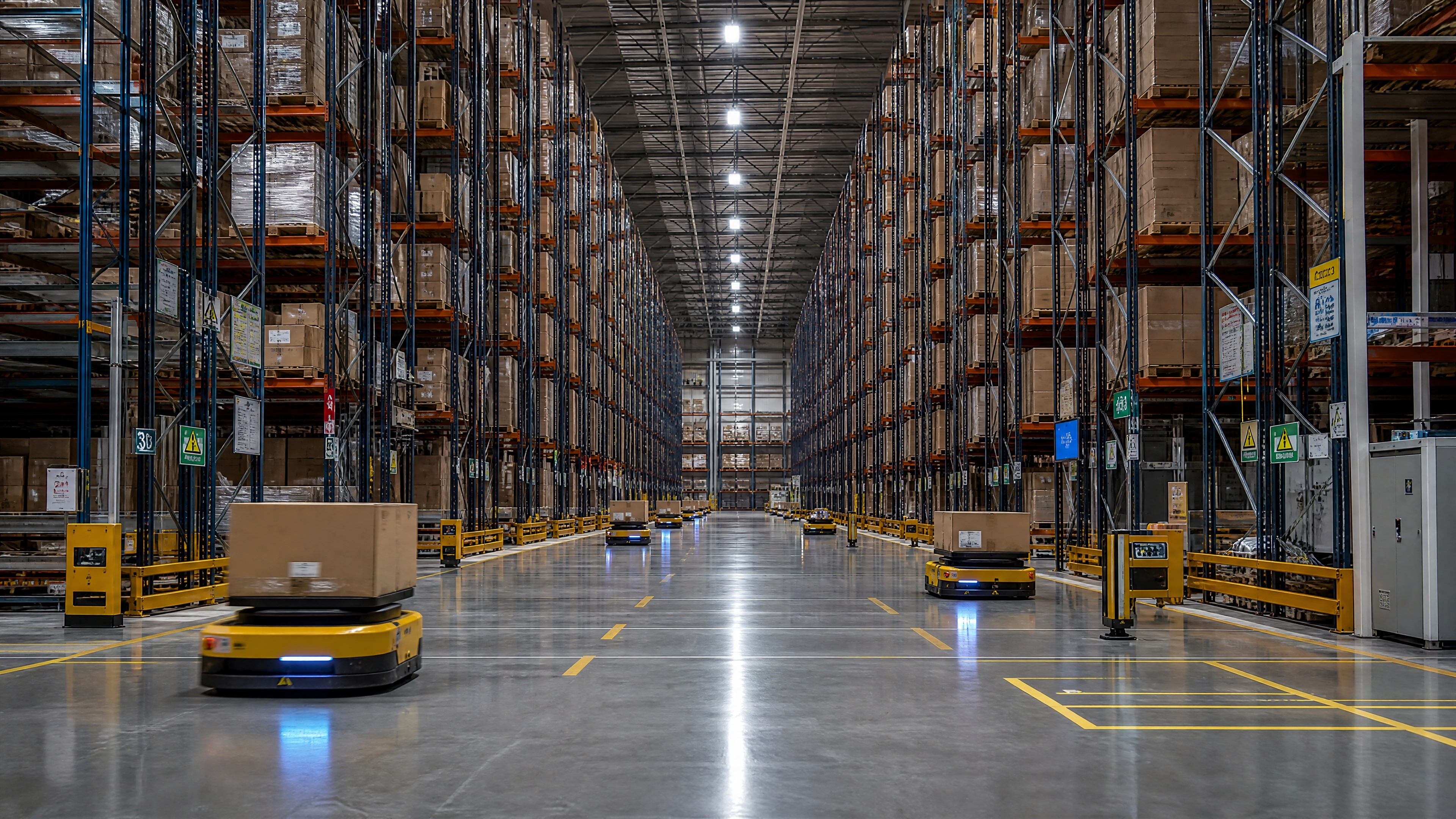
Warehouse Flooring
VIP Coatings
As nearshoring accelerates, factories and logistics hubs in Poland and Romania must be operational faster than ever—without sacrificing durability.
Our systems are engineered so that speed of installation and long-term durability are no longer competing priorities — they are delivered by the same application.”
MüNCHEN, GERMANY, July 23, 2026 /EINPresswire.com/ -- Central and Eastern Europe has become one of the preferred destinations for companies relocating manufacturing and logistics operations away from long, vulnerable global supply chains. Poland's industrial and logistics stock reached roughly 37.44 million sqm by the end of Q1 2026, with leasing activity in the quarter climbing to 1.58 million sqm, a 47 percent increase year-on-year, and Western Poland specifically highlighted as gaining importance as a nearshoring location. The country's total FDI stock now exceeds USD 300 billion, with real estate — particularly modern logistics and warehouse space — accounting for nearly USD 50 billion of that figure.— Alexander Voelkel
Romania is following a similar trajectory. Its modern warehouse stock passed 8.1 million sqm in Q1 2026, and the market has nearly doubled in recent years, making Romania the third-largest industrial and logistics market in Central and Eastern Europe, behind only Poland and the Czech Republic, with vacancy holding at around 5 percent. Manufacturing accounts for roughly 37-38 percent of Romania's total FDI stock, with automotive component production continuing to lead.
This momentum is reshaping expectations for industrial construction. Facilities that once took a year or more to plan and build must now move from groundbreaking to production-ready in a fraction of that time, while withstanding constant forklift traffic, chemical exposure, temperature fluctuation, and continuous shift operation from day one. VIP Coatings, which has built up an extensive track record of industrial flooring projects across the Middle East, is now expanding this expertise into Central and Eastern Europe through local application partners, demonstrating how advanced Polyaspartic, Polyurethane and Polyurea technologies can meet both the time pressure and the performance requirements defined by this new generation of industrial assets.
𝗕𝘂𝗶𝗹𝘁 𝗳𝗼𝗿 𝗦𝗽𝗲𝗲𝗱, 𝗘𝗻𝗴𝗶𝗻𝗲𝗲𝗿𝗲𝗱 𝗳𝗼𝗿 𝗟𝗼𝗮𝗱
Traditional epoxy flooring systems, while widely used, often require multiple curing days between layers — a timeline increasingly incompatible with compressed nearshoring construction schedules. Investors and general contractors are under pressure to hand over production-ready facilities within weeks, not months, making cure time as critical a specification as chemical resistance or abrasion class.
"When a facility's opening date is tied to a customer contract, every day of floor curing time is a day of lost production," says Alexander Voelkel, CEO of VIP Coatings. "Our systems are engineered so that speed of installation and long-term durability are no longer competing priorities — they are delivered by the same application."
VIP Coatings addresses this challenge through its QUICKFLOOR High-Performance Flooring Systems, combining Polyaspartic, Polyurethane and Epoxy technologies to deliver rapid curing, high abrasion resistance, and minimal operational downtime. For facilities requiring frequent washdowns or strict hygiene protocols — increasingly common in electronics assembly, food-adjacent logistics, and pharmaceutical-linked manufacturing — the FDA-approved CLEANCOAT system provides a seamless, chemical-resistant surface engineered for continuous cleaning cycles without compromising the substrate.
𝗪𝗶𝘁𝗵𝘀𝘁𝗮𝗻𝗱𝗶𝗻𝗴 𝘁𝗵𝗲 𝗥𝗲𝗮𝗹𝗶𝘁𝗶𝗲𝘀 𝗼𝗳 𝗛𝗲𝗮𝘃𝘆 𝗜𝗻𝗱𝘂𝘀𝘁𝗿𝗶𝗮𝗹 𝗨𝘀𝗲
Unlike office or retail environments, manufacturing floors in the nearshoring corridor are subjected to continuous forklift traffic, dropped tooling, chemical spills, and heavy racking loads from the first day of operation. Jointed or segmented flooring systems are particularly vulnerable under these conditions, as joints become early failure points, leading to costly repairs and unplanned downtime shortly after handover. Seamless, monolithic coating systems eliminate this vulnerability by creating a single continuous surface with no joints to fail — especially critical in logistics environments, where narrow-aisle warehousing and automated guided vehicles (AGVs) require dimensionally stable, perfectly level floors to function reliably over time.
𝗣𝗿𝗼𝘁𝗲𝗰𝘁𝗶𝗻𝗴 𝘁𝗵𝗲 𝗕𝘂𝗶𝗹𝗱𝗶𝗻𝗴 𝗘𝗻𝘃𝗲𝗹𝗼𝗽𝗲: 𝗥𝗼𝗼𝗳𝗶𝗻𝗴 𝗨𝗻𝗱𝗲𝗿 𝗣𝗿𝗲𝘀𝘀𝘂𝗿𝗲
Flooring is only part of the equation. The large-span roofs typical of logistics centers and production halls across Poland and Romania are exposed to significant thermal movement, UV radiation, and, in the case of Central European winters, heavy snow loads — all while needing to remain watertight over decades of service.
For these roof structures, VIP Coatings' VIPSHIELD system provides a fully bonded, seamless waterproofing membrane that eliminates the overlaps and mechanical fasteners associated with conventional membrane roofing, reducing the risk of water ingress at a building's most vulnerable points while contributing to energy efficiency through reduced thermal bridging.
"A logistics center's roof is rarely inspected until something leaks," says Voelkel. "Seamless systems like VIPSHIELD are designed to remove that failure point entirely, rather than manage it after the fact — that's the difference between reactive maintenance and true asset protection."
𝗔 𝗥𝗲𝗴𝗶𝗼𝗻𝗮𝗹 𝗢𝗽𝗽𝗼𝗿𝘁𝘂𝗻𝗶𝘁𝘆 𝗕𝘂𝗶𝗹𝘁 𝗼𝗻 𝗦𝘆𝘀𝘁𝗲𝗺 𝗧𝗵𝗶𝗻𝗸𝗶𝗻𝗴
As nearshoring investment continues to flow into Poland's and Romania's industrial corridors — from the Warsaw, Wrocław and Upper Silesia logistics belts to Romania's growing automotive supply clusters — the pressure on construction timelines is unlikely to ease. Facility operators are increasingly specifying coating and waterproofing systems not as isolated products, but as integrated solutions that account for substrate preparation, priming, and final membrane performance together.
"We see the same pattern across every nearshoring market we enter," says Voelkel. "Speed gets a project built, but system integrity is what keeps it running for the next twenty years. Our role is to make sure our customers don't have to choose between the two."
𝗔𝗯𝗼𝘂𝘁 𝗩𝗜𝗣 𝗖𝗼𝗮𝘁𝗶𝗻𝗴𝘀
VIP Coatings is a German manufacturer of high-performance polyurea, polyaspartic, hybrid and STP coating technologies for waterproofing, corrosion protection, industrial flooring and roofing applications, headquartered near Munich, Germany. Through integrated system solutions — including substrate preparation, primers and seamless protective coatings — the company supports infrastructure, commercial and industrial projects worldwide, delivered together with local application partners.
For more information, visit: www.vip-coatings.com
Julia Schubert
VIP Coatings Europe GmbH
email us here
Visit us on social media:
LinkedIn
Instagram
YouTube
Legal Disclaimer:
EIN Presswire provides this news content "as is" without warranty of any kind. We do not accept any responsibility or liability for the accuracy, content, images, videos, licenses, completeness, legality, or reliability of the information contained in this article. If you have any complaints or copyright issues related to this article, kindly contact the author above.
