

From Detection to Visual Confirmation: CHASING CanFish F2 Combines Sonar, Underwater Vision and AI
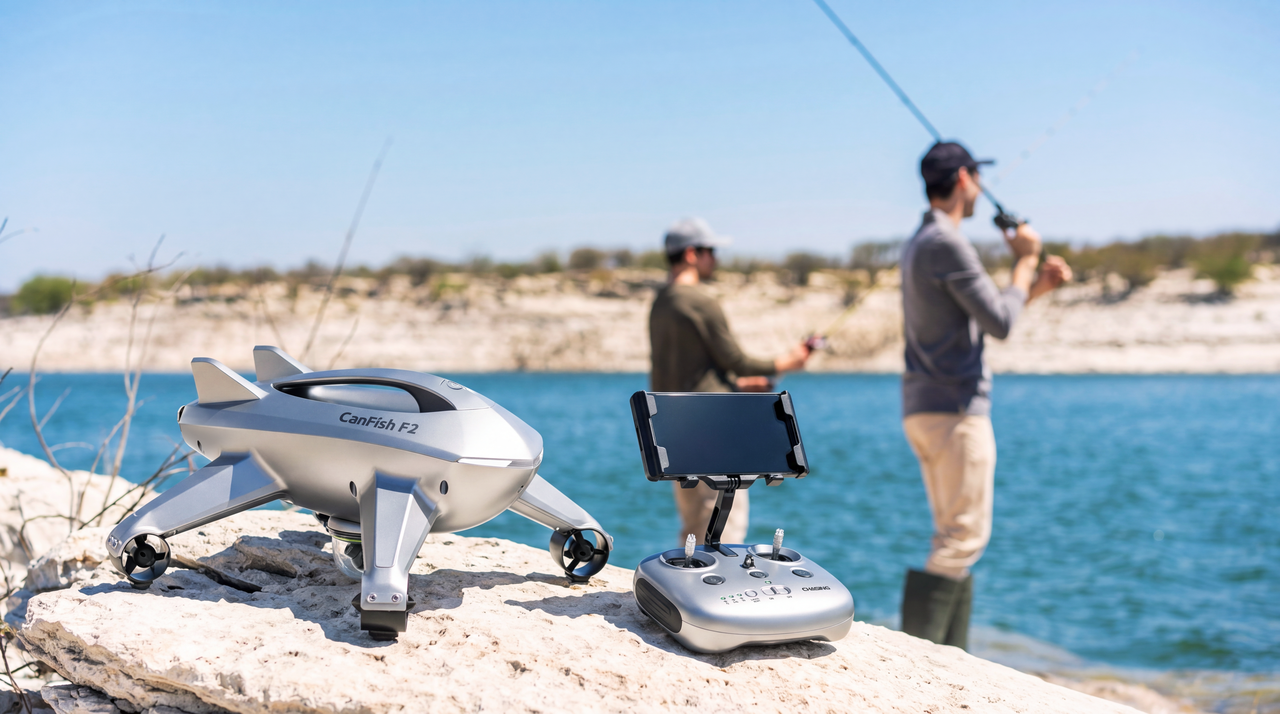
CHASING CanFish F2 is a 3-in-1 AI fishing scout that combines underwater vision, dual-frequency sonar and AI-assisted scouting to help anglers detect fish, understand underwater conditions and visually confirm promising spots before fishing.
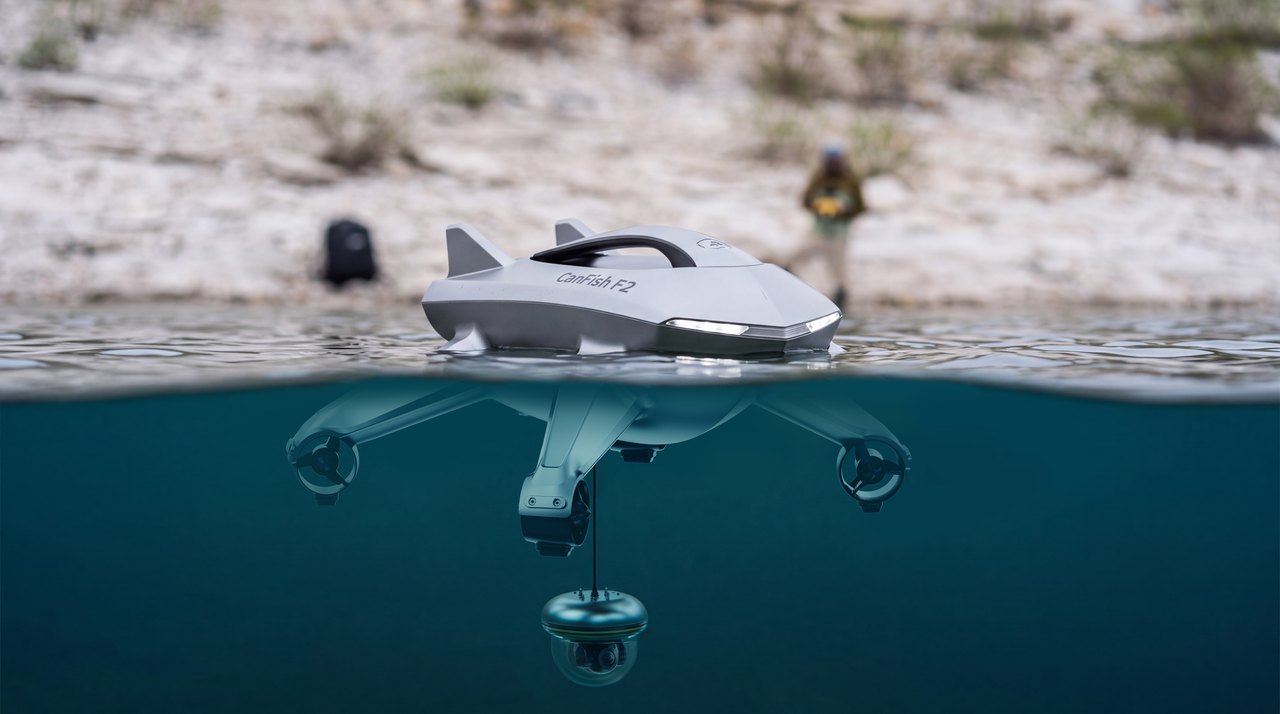
CHASING CanFish F2 deploys its motorized underwater camera beneath the surface, giving anglers live visual confirmation of fish, structure and underwater conditions after sonar detection.
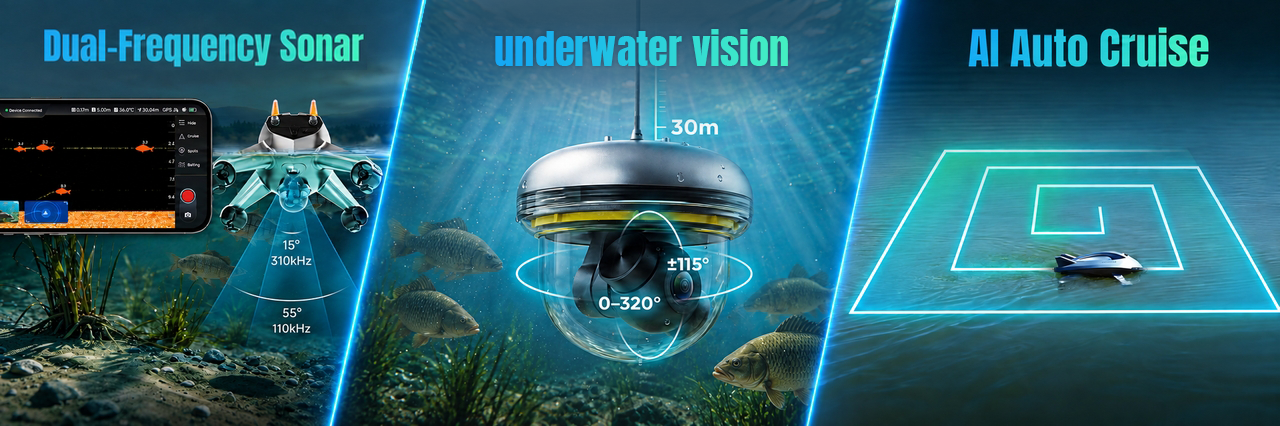
CHASING CanFish F2 integrates dual-frequency sonar, underwater vision and AI Auto Cruise into one 3-in-1 fishing scout, helping anglers scan the water, verify underwater conditions and automate scouting across a target area.
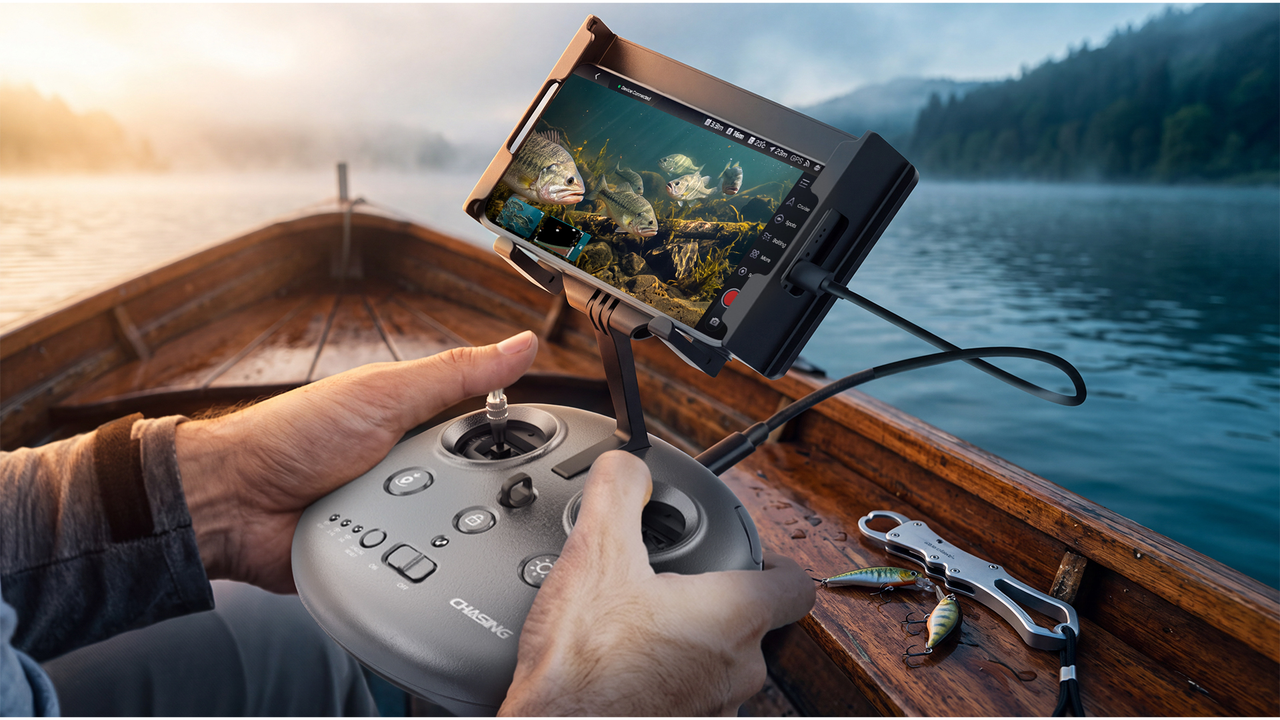
CHASING CanFish F2 integrates dual-frequency sonar, underwater vision and AI Auto Cruise into one 3-in-1 fishing scout, helping anglers scan the water, verify underwater conditions and automate scouting across a target area.
From Detection to Visual Confirmation: CHASING CanFish F2 Combines Underwater Vision, Dual-Frequency Sonar and AI to Rethink Fishing Scouting
ORLANDO, NY, UNITED STATES, September 30, 2026 /EINPresswire.com/ -- Sonar has changed the way anglers read water. It can reveal depth, structure and signs of fish activity long before anything becomes visible from the surface.
But sonar still leaves an important question unanswered:
What is actually down there?
CHASING developed the CHASING CanFish F2 around this gap between detection and visual confirmation.
Designed as The World’s First 3-in-1 AI Fishing Scout, CanFish F2 combines dual-frequency sonar, an underwater camera and AI-assisted scouting in one integrated system. The goal is to move beyond a single layer of underwater information and give anglers a more complete way to investigate unfamiliar water.
Sonar Finds the Clues. Vision Adds Context.
For many anglers, sonar is the first tool used to understand what lies beneath the surface.
Depth changes, underwater structure and sonar returns can all point toward areas worth investigating. But even a clear return does not always reveal the full picture.
A feature that appears promising on sonar may turn out to be covered in weed, surrounded by soft silt or simply different from what the angler expected.
This is where underwater vision adds another layer of information.
CanFish F2 is equipped with a motorized underwater camera that can descend to depths of up to 30 meters. The camera supports 0–320° horizontal rotation and ±115° tilt, allowing anglers to inspect the surrounding environment from multiple angles.
Low-light full-color imaging is designed to preserve more visual information in darker underwater conditions, helping anglers inspect bottom composition, structure and the surrounding habitat directly.
“Sonar is extremely effective at finding patterns and identifying areas that deserve attention, but a sonar return is still an interpretation of the underwater environment,” said the R&D Director at CHASING. “With CanFish F2, our approach was to connect sonar detection with direct visual information. One system helps you find where to look, and the other helps you understand what you are actually looking at.”
Dual-Frequency Sonar: From Broad Search to Focused Observation
CanFish F2 uses a dual-frequency sonar system designed to support both wider-area searching and more focused observation.
The 110 kHz / 55° wide beam provides broader coverage, making it suited to scanning larger areas and identifying changes in depth, structure or possible fish activity.
The 310 kHz / 15° narrow beam provides a more concentrated view of selected areas.
The sonar supports a detection range of approximately 0.6 to 100 meters and includes Fish Arch imaging, giving anglers another way to interpret underwater returns.
Rather than forcing anglers to choose between broad coverage and focused observation, CanFish F2 is designed around a progressive scouting process:
scan first, narrow the search, then investigate further.
Once an area stands out on sonar, the underwater camera can be lowered for closer visual observation.
The value lies not simply in having two sensors on one device, but in allowing information from one part of the scouting process to guide the next, reducing blind searching and helping anglers focus more quickly on areas worth investigating further.
AI Connects the Scouting Process
The third part of the CanFish F2 system is AI assistance.
Exploring a large area of water can involve repetitive movement and constant interpretation of changing sonar information. CanFish F2 uses AI-assisted functions to make parts of this process more efficient.
With AI Auto Cruise, anglers can select an area of water for CanFish F2 to investigate. The system then plans and follows a scouting route while continuously collecting sonar information.
When fish activity is identified on sonar, anglers can mark the target and send the underwater camera toward the detected depth for closer observation.
The camera can descend to approximately 30 centimeters above the marked fish position, helping connect sonar information with underwater visual observation more directly.
This workflow changes the role of AI from simply identifying data on a screen to assisting with what happens next.
The system can help move from:
scanning an area → finding a point of interest → approaching the target depth → visually checking the underwater environment.
The final interpretation and fishing decision remain with the angler.
A Different Approach to Reading Water
The 3-in-1 system is designed to support different fishing scenarios where understanding underwater conditions matters.
For carp anglers, sonar can be used to explore a swim and identify changes in depth or potentially interesting areas. The underwater camera can then provide direct information about weed, silt, cleaner bottom and surrounding structure before the angler commits to a spot.
For lure anglers fishing lakes and reservoirs, the same system can be used differently. After covering a stretch of water without results, sonar can help identify depth changes and structure that may deserve more attention, while the camera offers a closer look at the environment around those features.
CanFish F2 is not designed to automate fishing or replace an angler’s experience and judgment. Instead, it puts more underwater information in the hands of the angler. Where to fish, when to move, what rig to use and whether to keep waiting remain decisions for the angler. What CanFish F2 does is give those decisions more information to work with.
Built on More Than a Decade of Underwater Robotics Experience
CanFish F2 builds on CHASING’s more than ten years of experience developing underwater robotics.
Across multiple generations of underwater robotic systems, the company has developed technologies spanning underwater imaging, propulsion, navigation, communication and control.
CanFish F2 brings several of those capabilities together in a product designed specifically around fishing.
The system supports up to 200 meters of control and real-time video transmission, while four-vector propulsion enables flexible movement and navigation across the water.
For CHASING, the goal of CanFish F2 is not simply to add more sensors, but to bring previously separate sources of underwater information into a more connected scouting process — one that anglers can actually use to support their decisions.
Kickstarter Reservations Are Now Open
Early reservations for CHASING CanFish F2 are now open ahead of the Kickstarter campaign.
Anglers can visit the official CanFish F2 pre-launch page to learn more about the product and upcoming campaign. A $50 reservation locks in the $999 Founder Price and Founder-exclusive benefits.
Learn more:
https://canfishcam.com/products/canfish-f2-vip-pre-launch-priority-pass?utm_source=pr_distribution&utm_medium=pr&utm_campaign=CHASINGCanFishPREIN20260930
About CHASING
CHASING is a technology company focused on underwater robotics and underwater exploration, with products and technologies used across consumer, professional and industrial applications.
For more than a decade, CHASING has continued to explore new ways to bring underwater technology into real-world applications.
yang xiaoyang
CHASING INNOVATION TECH CO.,LTD
+86 159 2852 4095
email us here
Visit us on social media:
Instagram
Facebook
YouTube
TikTok
CHASING CanFish F2 | Real-Time Underwater Vision
Legal Disclaimer:
EIN Presswire provides this news content "as is" without warranty of any kind. We do not accept any responsibility or liability for the accuracy, content, images, videos, licenses, completeness, legality, or reliability of the information contained in this article. If you have any complaints or copyright issues related to this article, kindly contact the author above.
